Unit 13 Understanding the Computer Games Industry
Thursday, 12 June 2014
HA6 Task 2
Curriculum
Vitae
Name: Daryl Bates
D.O.B: 5th September 1996
Address: 115
Apple Grove
Swinton
Manchester
M28 4RF
Tel No: 0800
1066
Education:
Sept 2000 –
July 2008
Monton Green
Primary School
Pine Grove
Monton
Eccles
Manchester
Sept 2008 – July
2013
Moorside
High School
Wentworth
Road
Swinton
Manchester
G.C.S.E. Results:
Media D Additional Science C
English
Language C ITC Distinction
English
Literature C Mathematics C
French E Geography D
Drama D
College:
Sept 2013 -
Eccles 6th
Form College: Games Design Level 3
Hobbies/Interests:
I enjoy
playing PS3 games, watching films, listening to music, socialising with friends
and walking my dog. I have a keen interest in Mazda MX5’s and help my dad at
the weekends to repair and maintain them. I also help my dad with his website.
I enjoy going to the MX5 club shows and track days.
Monday, 9 June 2014
Monday, 2 June 2014
Thursday, 12 September 2013
Task 6 Contractual, Legal, Ethical and Professional
Employment:
Employment is a relationship between two parties, usually
based on a contract, one being the employer and the other being the employee.
Employer and managerial control within an organization rests at many levels and
has important implications for staff and productivity alike, with control
forming the fundamental link between desired outcomes and actual processes.
Employers must balance interests such as decreasing wage constraints with a
maximization of labour productivity in order to achieve a profitable and
productive employment relationship.
development:
1. The act of developing.
2. The state of being developed.
3. A significant event, occurrence, or change.
4. A group of dwellings built by the same contractor.
5. Determination of the best techniques for applying a new
device or process to production of goods or services.
6. The organized activity of soliciting donations or grants;
fundraising.
7. Music
a. Elaboration of a theme with rhythmic and harmonic
variations.
b. The central section of a movement in sonata form, in
which the theme is elaborated and explored.
Information sourced from: http://www.thefreedictionary.com/development
License:
1.
a. Official or legal permission to do or own a specified
thing. See Synonyms at permission.
b. A document, plate, or tag that is issued as proof of
official or legal permission: a driver's license.
2. Deviation from normal rules, practices, or methods in
order to achieve a certain end or effect.
3. Latitude of action, especially in behaviour or speech.
See Synonyms at freedom.
4.
a. Lack of due restraint; excessive freedom: "When
liberty becomes license, dictatorship is near" (Will Durant).
b. Heedlessness for the precepts of proper behaviour;
licentiousness.
1. To give or yield permission to or for.
2. To grant a license to or for; authorize.
Information sourced from: http://www.thefreedictionary.com/license
NDA:
A non-disclosure agreement (NDA), also known as a
confidentiality agreement (CA), confidential disclosure agreement (CDA),
proprietary information agreement (PIA), or secrecy agreement, is a legal contract
between at least two parties that outlines confidential material, knowledge, or
information that the parties wish to share with one another for certain
purposes, but wish to restrict access to or by third parties. It's a contract
through which the parties agree not to disclose information covered by the
agreement. An NDA creates a confidential relationship between the parties to
protect any type of confidential and proprietary information or trade secrets.
As such, an NDA protects non-public business information.
NDAs are commonly signed when two companies, individuals, or
other entities (such as partnerships, societies, etc.) are considering doing
business and need to understand the processes used in each other's business for
the purpose of evaluating the potential business relationship. NDAs can be
"mutual", meaning both parties are restricted in their use of the
materials provided, or they can restrict the use of material by a single party.
It is also possible for an employee to sign an NDA or NDA-like
agreement with an employer. In fact, some employment agreements will include a
clause restricting employees' use and dissemination of company-owned
"confidential information."
Information sourced from: http://en.wikipedia.org/wiki/Non-disclosure_agreement
Collaboration:
Collaboration is working with each other to do a task and to
achieve shared goals. It is a recursive process where two or more people or
organizations work together to realize shared goals, (this is more than the intersection
of common goals seen in co-operative ventures, but a deep, collective,
determination to reach an identical objective[by whom?][Original research?]) —
For example, an endeavour that is creative in nature—by sharing knowledge,
learning and building consensus. Most collaboration requires leadership,
although the form of leadership can be social within a decentralized and
egalitarian group. In particular, teams that work collaboratively can obtain
greater resources, recognition and reward when facing competition for finite
resources. Collaboration is also present in opposing goals exhibiting the
notion of adversarial collaboration, though this is not a common case for using
the word.
Structured methods of collaboration encourage introspection
of behaviour and communication. These methods specifically aim to increase the
success of teams as they engage in collaborative problem solving. Forms,
rubrics, charts and graphs are useful in these situations to objectively
document personal traits with the goal of improving performance in current and
future projects.
Information sourced from: http://en.wikipedia.org/wiki/Collaboration
Copyright:
Copyright is a legal concept, enacted by most governments,
giving the creator of original work exclusive rights to it, usually for a
limited time. Generally, it is "the right to copy", but also gives
the copyright holder the right to be credited for the work, to determine who
may adapt the work to other forms, who may perform the work, who may
financially benefit from it, and other related rights. It is a form of
intellectual property (like the patent, the trademark, and the trade secret)
applicable to any expressible form of an idea or information that is
substantive and discrete.
Information sourced from: http://en.wikipedia.org/wiki/Copyright
Trademark:
A trademark is a recognizable sign, design or expression
which identifies products or services of a particular source from those of
others. The trademark owner can be an individual, business organization, or any
legal entity. A trademark may be located on a package, a label, a voucher or on
the product itself. For the sake of corporate identity trademarks are also
being displayed on company buildings.
Information sourced from: http://en.wikipedia.org/wiki/Trademark
Patent:
A patent is a set of exclusive rights granted by a sovereign
state to an inventor or their assignee for a limited period of time, in
exchange for the public disclosure of the invention. An invention is a solution
to a specific technological problem, and may be a product or a process.
The procedure for granting patents, requirements placed on
the patentee, and the extent of the exclusive rights vary widely between
countries according to national laws and international agreements. Typically,
however, a patent application must include one or more claims that define the
invention. These claims must meet relevant patentability requirements, such as
novelty and non-obviousness. The exclusive right granted to a patentee in most
countries is the right to prevent others from making, using, selling, or
distributing the patented invention without permission.
Information sourced from: http://en.wikipedia.org/wiki/Patent
Registered Designs:
The following is the real terms of law on registered
designs, all of the "Registered designs Act" can be found on the
website link at the bottom of this article on registered designs.
1 Registration of designs
(1) A design may, subject to the following provisions of
this Act, be registered under this
Act on the making of an application for registration.
(2) In this Act “design” means the appearance of the whole
or a part of a product
Resulting from the features of, in particular, the lines,
contours, colours, shape, texture
Or materials of the product or its ornamentation.
(3) In this Act—
“Complex product” means a product which is composed of at
least two replaceable
Component parts permitting disassembly and reassembly of the
product; and
“Product” means any industrial or handicraft item other than
a computer program;
And, in particular, includes packaging, get-up, graphic
symbols, typographic type-
Faces and parts intended to be assembled into a complex
product.
Information sourced from: http://www.ipo.gov.uk/regdesignactchanges.pdf
Violence:
Violence is “the intentional use of physical force or power,
threatened or actual,
against oneself, another person, or against a group or community, which either
results in or has a high likelihood of resulting in injury, death,
psychological harm, maldevelopment, or deprivation.” This definition associate’s intentionality
with the committing of the act itself, irrespective of the outcome it produces.
The main ethical issue involved with violence in video games
is freedom of speech. If the government were to restrict the intensity of
violence in video games, then they would be violating freedom of speech. It is
unethical to outlaw video game violence or to hold developers of these games
responsible for violent acts committed by their customers.
Let’s take the utilitarian point of view, wherein the
ethical option is the one that creates the most happiness for the most people.
Although video games are by no means a requirement of happiness, it should be
noted that video games are a common leisure activity for people around the
world. Therefore, the civil suits against video game developers and laws
against violence in games is unethical because it decreases the amount of games
that can be made and thus the overall happiness level of those who play games.
Although it can be argued that regardless of a rating
system, there will be parents who will let their kids play games regardless of
rating. To argue this point, we should do a cost and benefits analysis. The
benefits outweigh the costs as parents who use an improved rating system will
have an increased understanding of the game content, which will ultimately
allow them to make better decisions for their children. Additionally, the game
industry may gain some goodwill from parent's groups who have been known to criticize
the game industry.
Information sourced from:http://ethics.csc.ncsu.edu/speech/freedom/violence/study.php
Rating:
A video game content rating system is a system used for the
classification of video games into suitability-related groups. Most of these
systems are associated with and/or sponsored by a government, and are sometimes
part of the local motion picture rating system. The utility of such ratings has
been called into question by studies that publish findings such as 90% of
teenagers claim that their parents "never" check the ratings before
allowing them to rent or buy video games, and as such calls have been made to
"fix" the existing rating systems. Video game content rating systems
can be used as the basis for laws that cover the sales of video games to
minors, such as in Australia. Rating checking and approval is part of the game
localization when they are being prepared for their distribution in other
countries or locales. These rating systems have also been used to voluntarily
restrict sales of certain video games by stores, such as the German retailer
Kaufhof's removing all video games rated 18+ by the USK following the Winnenden
School shooting.
Information source from: http://en.wikipedia.org/wiki/Video_game_content_rating_system
Education:
The most widely used "positive" impact video games
are said to have on children is that they may improve a player's manual
dexterity and computer literacy. Ever-improving technology also provides
players with better graphics that give a more "realistic" virtual
playing experience.
This quality makes the video game industry a powerful force
in many adolescent lives. However, numerous studies show that video games,
especially ones with violent content, adversely affect a teen's aggressive behaviour.
Part of the increase in aggressive behaviour is linked to
the amount of time children are allowed to play video games. In one study by
Walsh (2000), a majority of teens admitted that their parents do not impose a
time limit on the number of hours they are allowed to play video games. The
study also showed that most parents are unaware of the content or the
Entertainment Software Rating Board (ESRB) rating (see below) of the video
games their children play.
Information sourced from: http://www.education.com/reference/article/Ref_Impact_Video_Games/
I personally agree that video games generally have a positive effect on education, because when students have the stress of education pulling them down they can play a few hours of video games to either take out their stress on the game, or just simply relax and allow the stress to fade away. I have personally experienced this.
Stereotyping:
There are lots of different stereotypes when it comes to gaming. For example, gamers them selves can be stereotyped:
Gamers.
Gamers.
Just the mention of the word seems to conjure images of
overweight, acne-ridden males, living in their parent’s basements, surviving on
a diet of Burger Rings and Redbull. They are smelly, unsociable cave dwellers;
sporting their sweat laden t-Shirts with the latest internet meme that would
only ever make sense to another ‘gamer’ that they have no chance of running
into, as they never leave their darkened rooms.
The show Southpark portrays a Gamer from the episode "Make love, not Warcraft"
Women and racial ethnicities can be stereotyped in video games:
The portrayal of women in video games is the subject of
academic study and controversy. Recurring themes in both include the level of
independence of female characters from their male counterparts, as well as
their sexual objectification and sexualisation.
Early video games typically presented women in subsidiary
roles, dependent on male protagonists. Many more recent games include women in
active and self-reliant attitudes, but some have also increased the sexualized
portrayal of women so as to appeal to a male audience.[2] In 2012, for
instance, Dead or Alive director, Yohei Shimbori, admitted the developers
received complaints from fans who had played the Dead or Alive 5 demo packaged
with Ninja Gaiden 3. According to Shimbori, "We actually got a lot of feedback
from people who were playing it, saying, 'We want bigger breasts. Make the
characters more like that.' That was kind of surprising." Controversy is
generated by cultural stereotypes, sexism and violence towards women portrayed
in games.
Information sourced from:http://en.wikipedia.org/wiki/Gender_representation_in_video_games#Portrayal_of_women
The prime example that usually comes up in debates on racism
and video games is Resident Evil 5. Resident Evil 5 has been identified as
racist by some because of its portrayal of Africans. Some individuals believe
that the images presented in this title make Africans (black Africans in
particular) look like brutal savages, and they also provoke images of the days
that African peoples were victims of colonialism.
Information sourced from: http://venturebeat.com/2009/09/28/racial-stereotypes-in-video-games-how-do-we-change-them/
Addiction:
Arguments for video games are addictive:
1. Numerous studies have found associations between computer
game addiction and issues such as poor academic performance, work-related
difficulties, marital dissatisfaction, poor health, and other psychological
problems like anxiety and depression.
2. Habits such as exercise, gambling, sex, and computer
games may not result in physical dependency like alcohol or drug addiction do,
but many argue that psychological dependence can result if people become obsessed
with these activities.
3. Excessive computer gaming seems to share a number of behavioural
and cognitive symptoms with gambling addiction (which is officially recognized
as a psychological problem).
4. When gambling addiction was initially suggested as a
psychological disorder, many of the same arguments were made against the diagnoses
that are today being made against the concept of computer game addiction.
5. Even if excessive computer gaming can be brought on by
other mental health issues (e.g., depression), this does not mean that it
ceases to exist. For example, alcohol abuse may be exacerbated by chronic
anxiety and stress, yet few would argue that alcohol addiction isn't
"real". Simply because excessive gaming can be triggered by other
psychological issues does not mean that a separate diagnosis of computer game
addiction is unjustified. Computer game addiction may exist independently of
other psychological conditions or alongside other disorders.
Arguments against:
1. Although some individuals may play computer games to
avoid addressing other personal issues, this does not necessarily indicate
"addiction", but rather a less than ideal problem solving approach to
life challenges, stress, and temptations.
2. Computer game "addiction" may simply be a
symptom of other psychological, emotional, or interpersonal problems like
anxiety, depression, poor self-esteem, relationship difficulties, and poor
impulse control. It is sometimes argued that if the underlying problem was
addressed, the symptoms of computer game addiction would diminish or disappear
completely.
3. As a whole, computer game addiction is rarely as serious
as drug or alcohol addiction and furthermore, computer game addiction does not
have a physiological component (i.e., physical dependence). Drug addiction
often leads to serious health consequences, loss of employment, relationship
loss, and criminal behaviour. In contrast, computer game addiction mostly just
leads to lost or wasted time.
4. Due to the sometimes sensational coverage of computer
game addiction in the media, it may be easy to overestimate the prevalence and
seriousness of excessive computer use.
5. Playing computer games to briefly escape stress in the
real world may in fact be healthy and adaptive, and not necessarily a problem
that requires a diagnosis or treatment.
UKIE:
Ukie is the only trade body for the UK’s wider interactive
entertainment industry. We exist to champion the interests, needs and positive
image of the video games and interactive entertainment industry whose companies
make up our membership.
We’re here to help ensure that our members from the
video games and wider interactive entertainment industry have the right
economic, political and social environment needed for this expanding industry
to thrive.
We provide a range of services to meet the shared needs of
our members and to further the interests of the interactive entertainment
industry as a whole:
We build strong working relationships with parliamentarians
and policy makers to ensure industry needs are met through appropriate
Government support.
Our dedicated intellectual Property Crime Unit seeks to
minimise the damage caused by intellectual property theft and catch those responsible
for this criminal activity.
We act as a public information resource, to help consumers
and the media better understand gaming.
We provide advice to budding IP creators and sellers on how
best to pursue careers in the industry.
We work with our European partners, ISFE to ensure our
members are aware of key EU developments and to promote the priorities and
interests of the industry in Europe.
Information sourced from: http://ukie.info/about
IGDA:
The IGDA was founded in 1994 by Ernest Adams and was
initially known as the Computer Game Developers Association (CGDA). Modelled
after the Association for Computing Machinery, Adams envisioned the
organization to support the careers and interests of individual developers, as
opposed to being a trade organization, or an advocacy group for companies.
The need for a professional association for game developers
was not apparent until the congressional hearings surrounding Mortal Kombat and
other video game legislation became common in the 1990's. With legislation
affecting the game development industry, the IGDA developed into a more
organized voice for computer game developers as it merged with the Computer
Entertainment Developers Association and grew from 300 members to over 12,000
members the next fifteen years.
In December 2012, Kate Edwards was appointed executive
director after Gordon Bellamy, the previous executive director, moved on from
the position in July of that year to join Tencent.
Information sourced from: http://en.wikipedia.org/wiki/International_Game_Developers_Association
Women in games:
Women in Games Jobs (WIGJ) works to recruit, retain and
support the progression of women in the games industry by positively and
actively promoting female role models and giving encouragement and information
to those women seeking to work in games.
Women in Games Jobs was incorporated as a “not for profit”
or Community Interest Company under the UK’s Companies Act 2006 on 2 June 2011.
ABOUT WOMEN IN GAME DEVELOPMENT
Developing Video games is increasingly being seen an
exciting and rewarding career for women.
Whether you come from an artistic, technical, creative, marketing or
managerial background there are jobs in the games industry to suit you,
offering interesting career progression and a stimulating and passionate work
environment.
BAFTA:
The British Academy of Film and Television Arts (BAFTA) is
an independent charity that supports, develops and promotes the art forms of
the moving image - film, television and games. In addition to its annual awards
ceremonies, BAFTA has an international, year-round programme of learning events
and initiatives offering access to talent through workshops, masterclasses,
scholarships, lectures and mentoring schemes in the UK and the USA.
MEF:
The Managed Extensibility Framework or MEF is a library for
creating lightweight, extensible applications. It allows application developers
to discover and use extensions with no configuration required. It also lets
extension developers easily encapsulate code and avoid fragile hard
dependencies. MEF not only allows extensions to be reused within applications,
but across applications as well.
Task 5 Trends
Franchised IP:
"To
give the right or the privilege" Intellectual property (IP) refers to
creations of the mind: inventions, literary and artistic works, and symbols,
names, images, and designs used in commerce.
IP is
divided into two categories: Industrial
property, which includes inventions (patents), trademarks, industrial designs,
and geographic indications of source; and Copyright, which includes literary
and artistic works such as novels, poems and plays, films, musical works,
artistic works such as drawings, paintings, photographs and sculptures, and
architectural designs. Rights related to
copyright include those of performing artists in their performances, producers
of phonograms in their recordings, and those of broadcasters in their radio and
television programs. For an introduction to IP for non-specialists.
An example
of franchised intellectual property would be were characters from films or
other games are used in a different game. For example in “Super Smash bro’s” in
this game characters from other series like Sega’s “Sonic” and Konami’s “Snake”(
from metal gear solid ) as well as some of Nintendo’s own characters.
Serialized Original IP:
Created from
scratch (often inspired by other copyrighted works) and then built into a
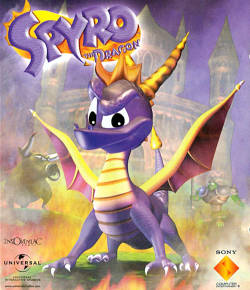
series. An example of this would be “Skylanders” witch was based on the game “Spyro”.
The game
skylanders used the character Spyro to create their own game based on him on his friends such as "Cynder". However, the charcters are slightly different therefore they own all the copyright.
Subscribe to:
Posts (Atom)